
A reliable supply chain for overhead transmission lines starts long before a glass insulator is mounted on a tower. It starts on the production floor — and continues through a controlled sequence of inspection, pull-testing and packaging. This short photo tour walks through how KZAN prepares a production batch of tempered glass insulators for global shipment, and what those images actually mean for a project buyer.
A snapshot of KZAN production capacity
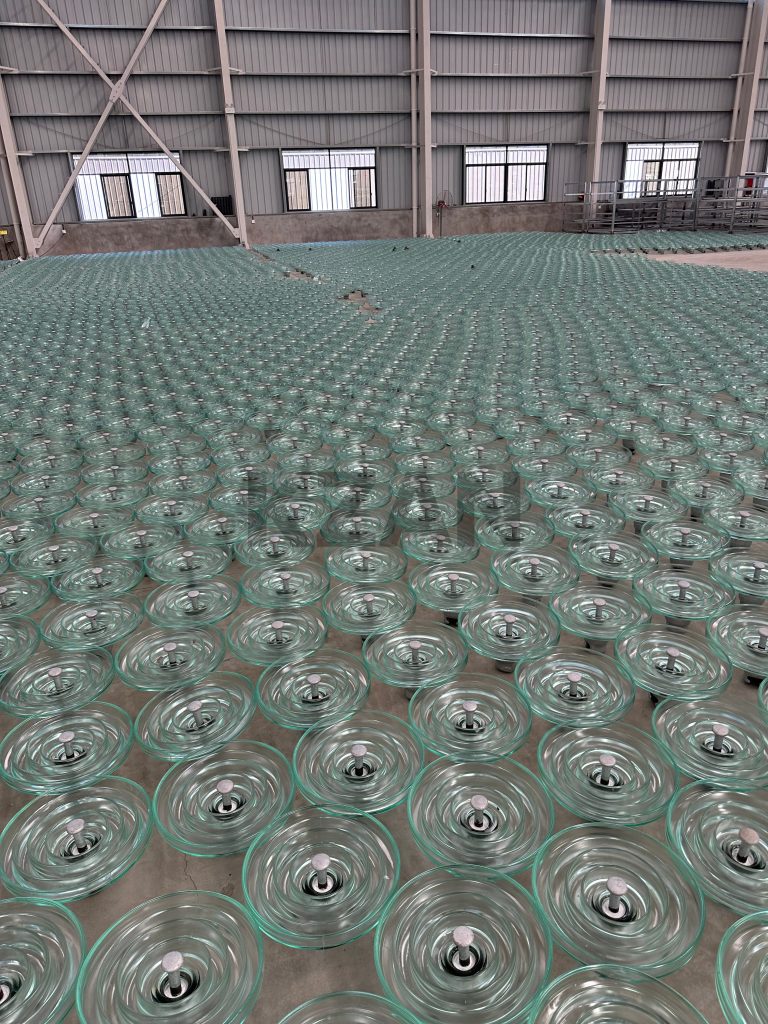
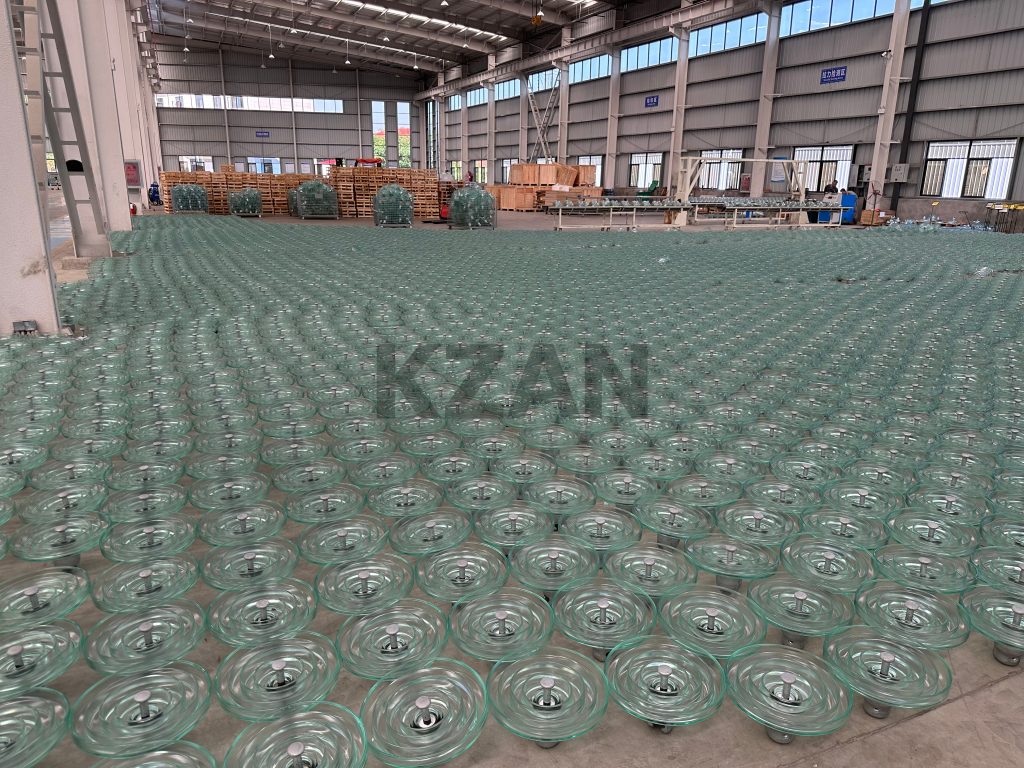
When a utility or EPC contractor asks whether a factory can deliver a full batch of 70 kN, 120 kN or 210 kN cap-and-pin units on time, the answer usually starts in the warehouse. The image below shows the floor of our Jiangxi facility in production days: thousands of toughened glass disc insulators arranged by batch, ready for the next stages of inspection.
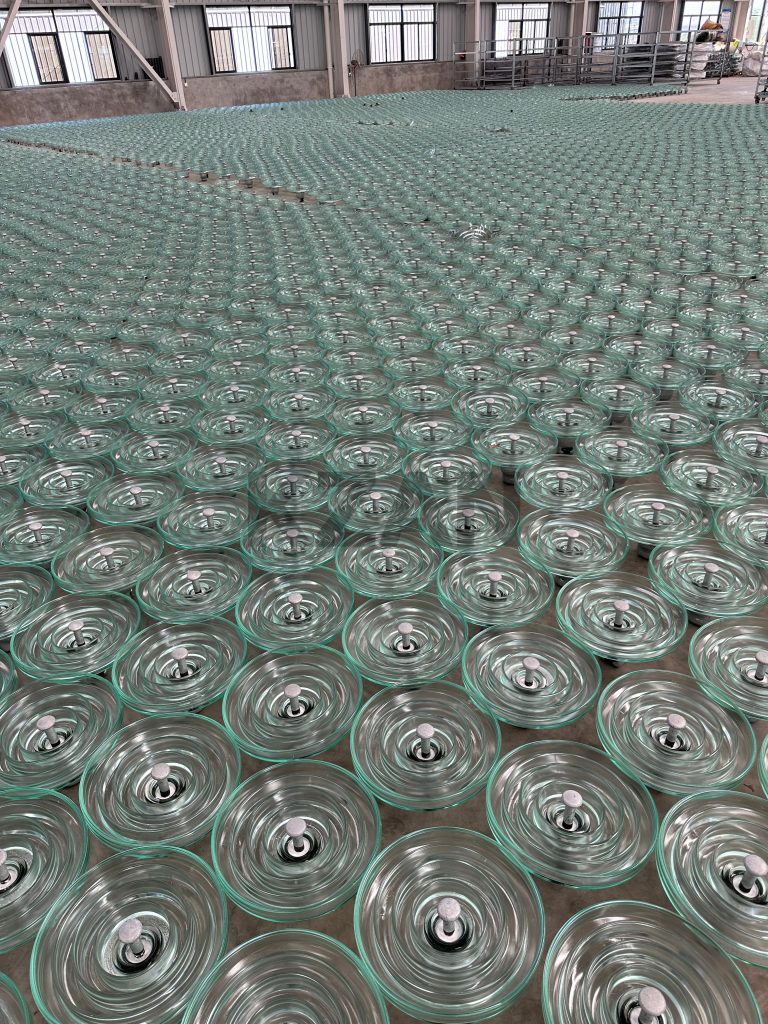
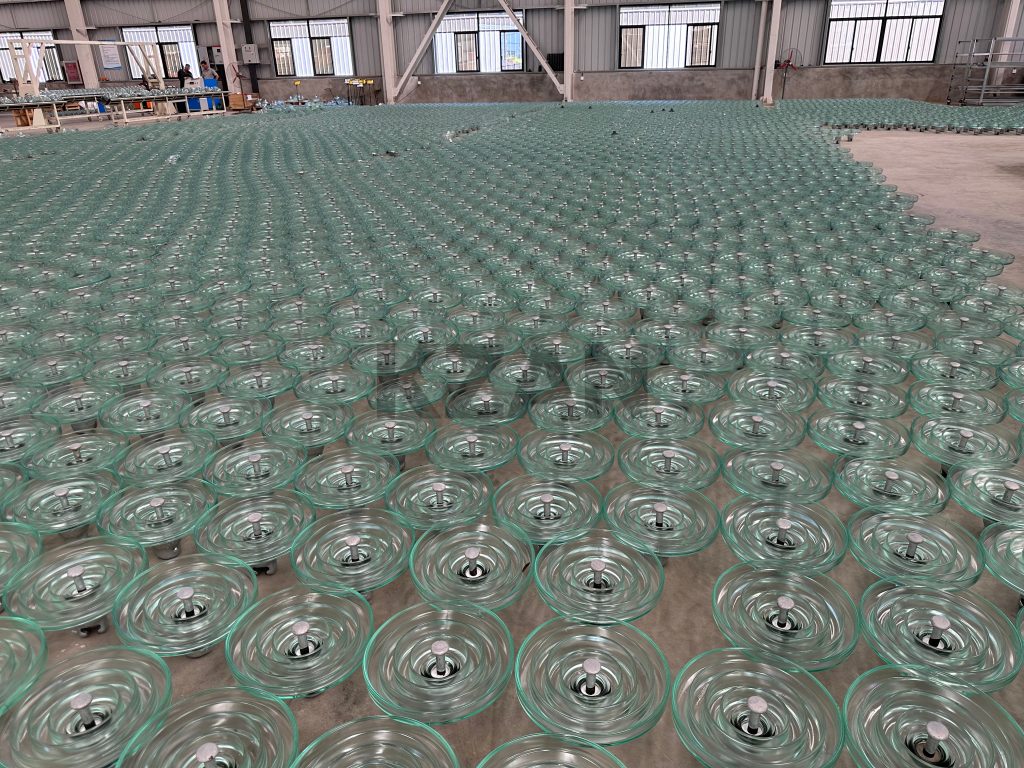
We hold stock in the tens of thousands across standard suspension units, double-shed anti-pollution versions and high-strength 120 kN / 160 kN / 210 kN classes such as the U210BP for tension strings on 220 kV and above lines. Batch-level visibility like this is what lets us commit to short delivery windows without sacrificing inspection depth.
Quality control zones inside the facility
Behind the stockpile, the floor is divided into dedicated zones. Every batch passes through:
- Storage / placement zone — incoming units are segregated by model, batch number and mechanical rating, with traceable tagging.
- Pull test area — every production run is sampled and tested to its mechanical failing load (40 kN / 70 kN / 120 kN / 210 kN depending on class) before release.
- Final visual and electrical inspection — each disc is examined for surface defects, shell integrity and cap-and-pin assembly.
In the standard suspension class, this is where a 70 kN unit earns its IEC 60305 line rating. For double-shed U70BP / U120BP pollution-resistant units, the pull test is paired with dimensional checks against the relevant creepage specification (400–450 mm, depending on the antifog variant).
Packaging and global shipping preparation
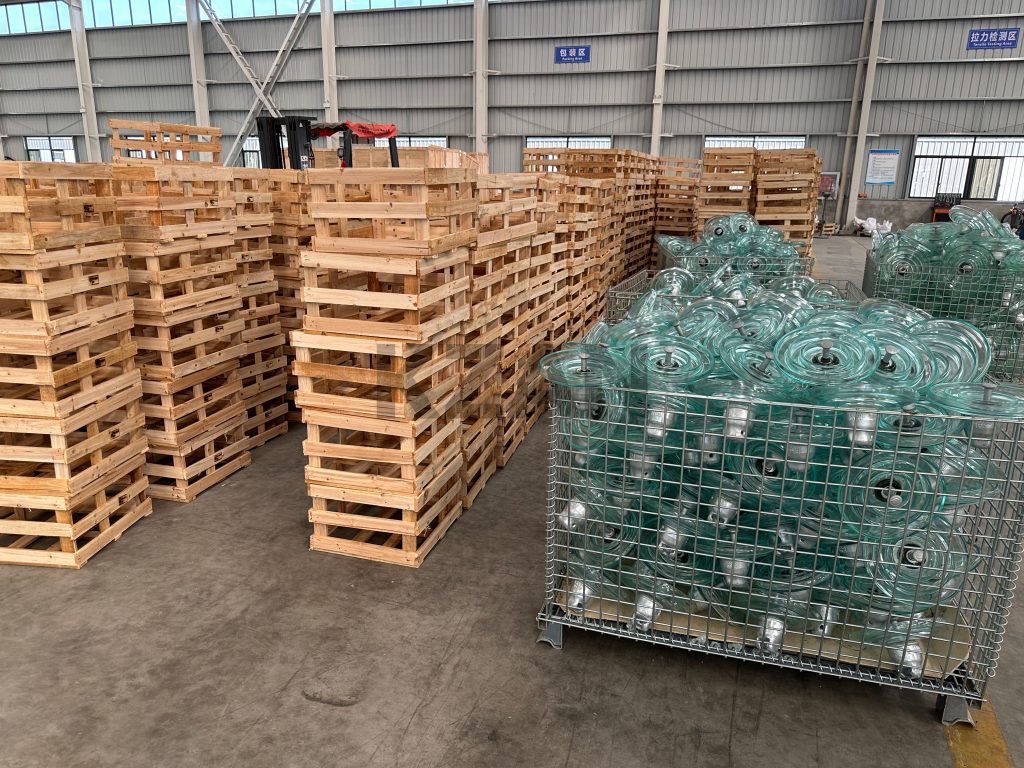
Once a batch passes the final inspection, units move to packaging in wooden crates or steel-mesh export cages. Palletising is done in the same zone as the pull-test area, which keeps handling steps to a minimum and avoids re-touching the discs once they are cleared.
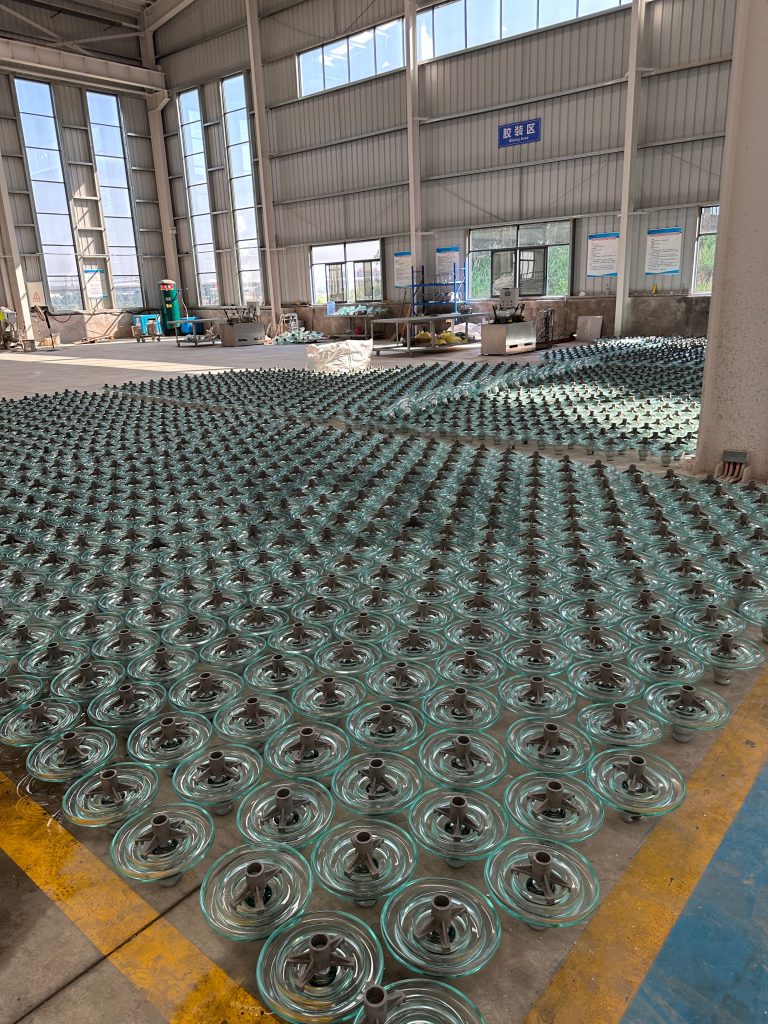
Each pallet is labelled with batch number, mechanical class, and IEC reference, so receiving engineers can match the consignment against the type-test certificate on arrival.
What this means for your project
For a procurement team evaluating a glass insulator supplier, what matters in the warehouse is three things — scale, segregation, and evidence of control. The stockpile shows scale; the labelled zones show segregation; the pull-test area shows evidence. Together, that is the practical case for short lead times and reliable in-field performance.
If you are sizing a tender for 35 kV–500 kV overhead lines and want to confirm batch availability for your project, send us your string configuration and quantities and our engineering team will come back with availability, lead time, and a formal quotation.